
Our Services
We Build, Repair & Service
We strive to provide our clients with the best service
Flatdecks
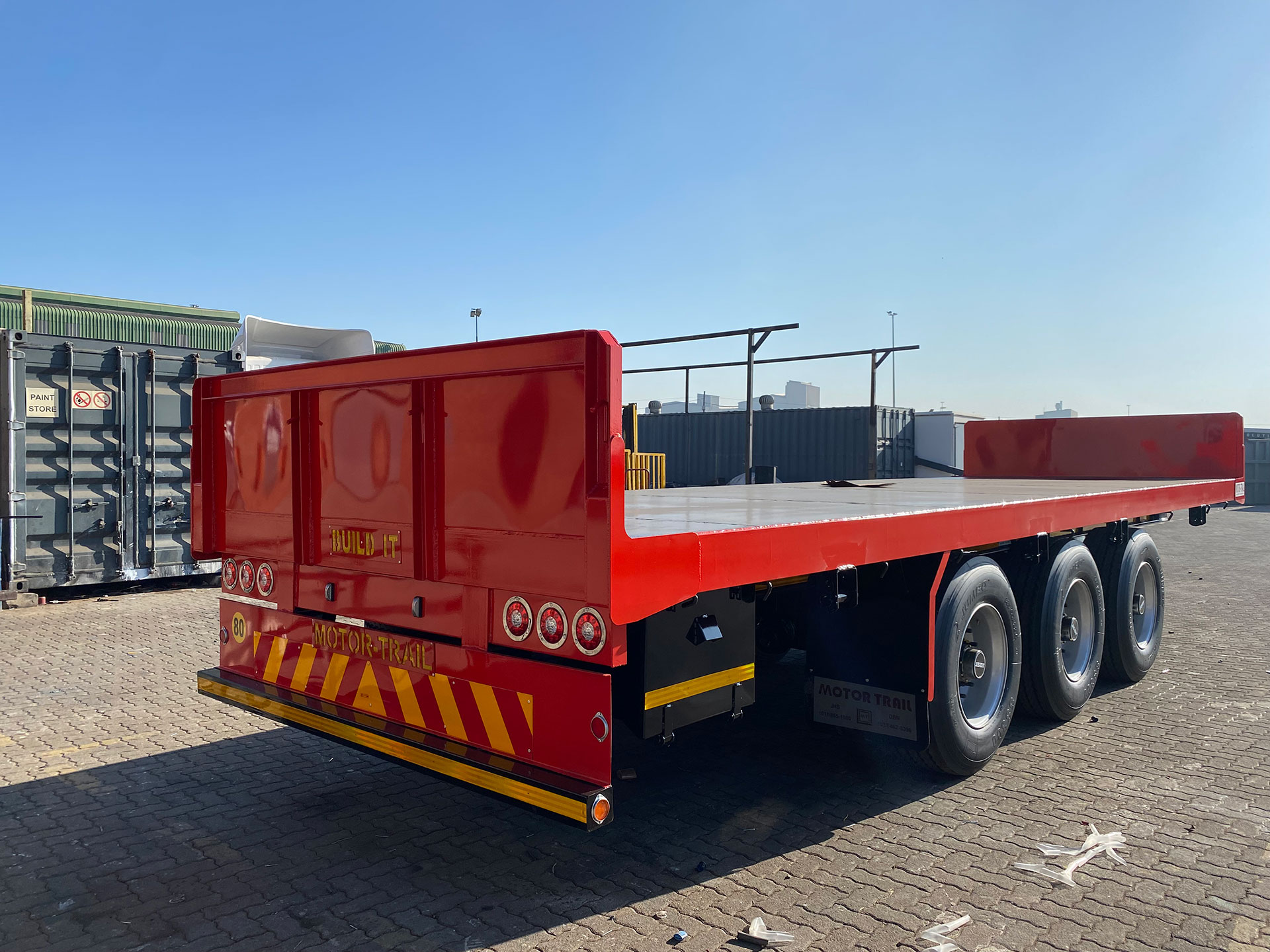
A flatbed truck trailer, also known simply as a flatbed or flatbed trailer, is a type of trailer characterized by its flat, level bed without any sides or roof. It consists of a platform mounted on axles and wheels, designed to carry loads of various shapes and sizes.
Flatbed trailers are commonly used for transporting oversized, heavy, or irregularly shaped cargo that cannot easily fit into enclosed trailers or containers. They are often utilized in industries such as construction, manufacturing, and transportation of large equipment and machinery.
One of the main advantages of flatbed trailers is their versatility. They can accommodate loads that are too tall, wide, or long for other types of trailers. Additionally, loading and unloading cargo onto a flatbed is typically easier compared to trailers with enclosed sides or roofs.
Flatbed trailers are commonly seen on highways and in shipping yards, and they are often pulled by semi-trucks or other heavy-duty towing vehicles.
Drawbars
A drawbar truck trailer, also known as a drawbar trailer or simply a drawbar, is a type of trailer commonly used in Europe and some other parts of the world.
It consists of a trailer with a rigid front axle or axle assembly, which is connected to a towing vehicle via a drawbar or tongue. This drawbar is typically attached to the towing vehicle’s rear chassis or frame and provides a pivot point for steering. The towing vehicle can be a truck or a specialized tractor unit.
Drawbar trailers are often used for transporting goods, especially in industries like agriculture and construction. They offer good maneuverability, stability, and ease of coupling and uncoupling compared to other types of trailers like semi-trailers.
Rigids
A rigid truck trailer, also known simply as a rigid trailer or box trailer, is a type of trailer that is permanently attached to a rigid truck chassis. Unlike semi-trailers, which are connected to a tractor unit via a fifth wheel coupling, rigid trailers are fixed directly to the truck’s chassis.
Rigid truck trailers typically have a single body with enclosed sides and a roof, resembling a large rectangular box. They are commonly used for transporting goods that require protection from the elements or additional security.
These trailers are often used in urban delivery settings, as they provide efficient and secure transportation for various types of cargo, including palletized goods, furniture, appliances, and other commodities.
Rigid truck trailers come in various sizes and configurations, ranging from small vans to large box trucks. They are popular in distribution and logistics operations due to their versatility, ease of loading and unloading, and suitability for local or regional deliveries.
Specialised
A specialized truck trailer refers to a trailer designed and built for specific purposes or to transport particular types of cargo. These trailers are tailored to meet the unique requirements of certain industries, cargo types, or transportation challenges. Here are some examples of specialized truck trailers:
- Refrigerated trailers (Reefers): These trailers are equipped with refrigeration units to transport perishable goods such as food, pharmaceuticals, or chemicals at controlled temperatures.
- Tanker trailers: Tanker trailers are designed to transport liquids or gases, such as fuel, water, chemicals, or liquefied gases. They come in various configurations depending on the specific type of cargo they are intended to carry.
- Flatbed trailers: Flatbed trailers have a flat, open deck without sides or a roof, making them suitable for transporting oversized, heavy, or irregularly shaped cargo that cannot be easily accommodated in enclosed trailers.
- Lowboy trailers: Lowboy trailers are characterized by their low deck height and are specifically designed to transport tall or oversized equipment, machinery, or construction vehicles. They are commonly used in the construction and heavy equipment industries.
- Livestock trailers: These trailers are designed to transport animals, such as cattle, horses, sheep, or pigs, in a safe and humane manner. They typically feature partitions, ventilation systems, and other amenities to ensure the comfort and well-being of the animals during transit.
- Car carriers: Car carrier trailers are designed to transport automobiles, motorcycles, or other vehicles. They come in various configurations, including open-air trailers for short-distance transport and enclosed trailers for long-distance or high-value vehicle transportation.
- Specialized cargo trailers: These trailers are designed to transport specific types of cargo, such as logging trailers for transporting timber, tipper trailers for hauling bulk materials like gravel or sand, or curtain-sided trailers for quick and convenient loading and unloading of goods.
Overall, specialized truck trailers play a crucial role in various industries by providing efficient and safe transportation solutions for specific types of cargo or logistical challenges.
Tautliners & Pantechs
A tautliner and a pantech are both types of truck trailers used for transporting goods, but they have some differences in design and functionality:
- Tautliner: A tautliner, also known as a curtainsider or curtain-sided trailer, is a type of trailer with a flexible curtain-like cover on its sides. The curtain can be easily opened and closed, similar to curtains on a stage. Tautliners provide the flexibility of both an open flatbed trailer and an enclosed box trailer. They allow for easy loading and unloading from the sides while still providing protection from the elements. Tautliners are commonly used for transporting palletized goods, boxed items, or any cargo that needs to be loaded and unloaded quickly from the sides.
- Pantech: A pantech, short for “pantechnicon,” is a type of box trailer with solid walls and a roof, typically made of plywood or other sturdy materials. Unlike tautliners, pantech trailers do not have curtains on the sides. They provide full enclosure and protection for the transported goods, shielding them from weather conditions, theft, and damage during transit. Pantech trailers are commonly used for transporting sensitive or valuable cargo that requires extra security or protection, such as electronics, furniture, appliances, or perishable goods.
In summary, while both tautliners and pantech trailers are used for transporting goods, tautliners offer the versatility of easy side loading and unloading with their curtain-sided design, while pantech trailers provide full enclosure and protection for the cargo with solid walls and a roof. The choice between the two depends on the specific requirements of the cargo being transported, as well as considerations such as loading and unloading procedures, security needs, and weather conditions.
Tippers
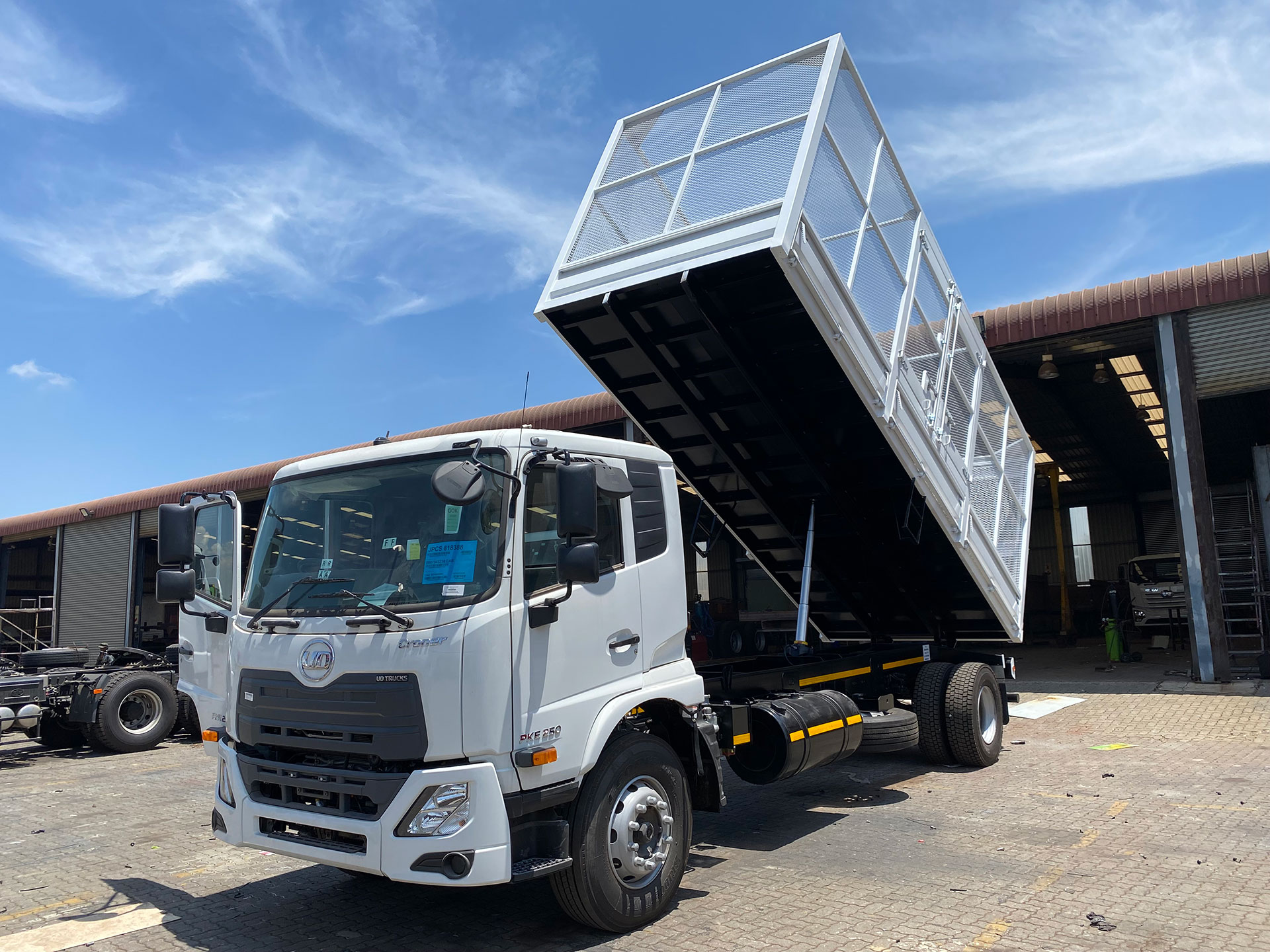
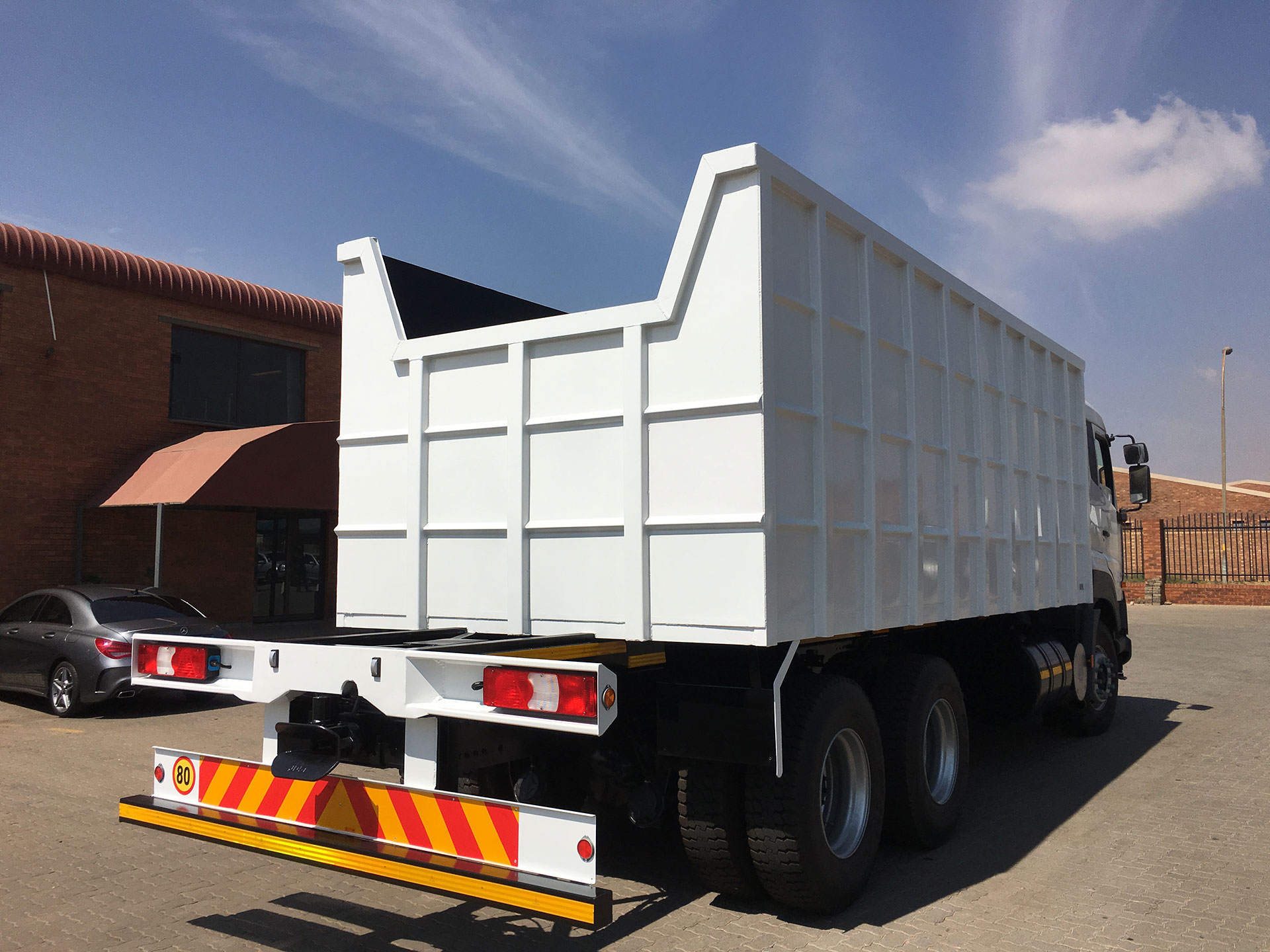
A tipper truck trailer, also known simply as a tipper trailer or dump trailer, is a specialized type of trailer used for transporting and unloading loose materials such as sand, gravel, soil, construction debris, or agricultural products.
The distinguishing feature of a tipper trailer is its ability to tilt or tip its cargo bed to unload the contents rapidly. This is achieved through hydraulic cylinders or other mechanisms that raise one end of the trailer, allowing the cargo to slide out of the back of the trailer.
Tipper trailers are commonly used in construction, mining, agriculture, and waste management industries, where the rapid and efficient unloading of bulk materials is essential. They offer advantages such as quick loading and unloading times, which can increase productivity on job sites, as well as the ability to transport heavy loads over uneven terrain.
These trailers come in various sizes and configurations, ranging from smaller models pulled by light-duty trucks to large semi-trailers pulled by heavy-duty trucks. The design and capacity of a tipper trailer depend on factors such as the type of material being transported, the weight requirements, and the specific needs of the industry or application.





Our Partners
We collaborate 25+ Partners
